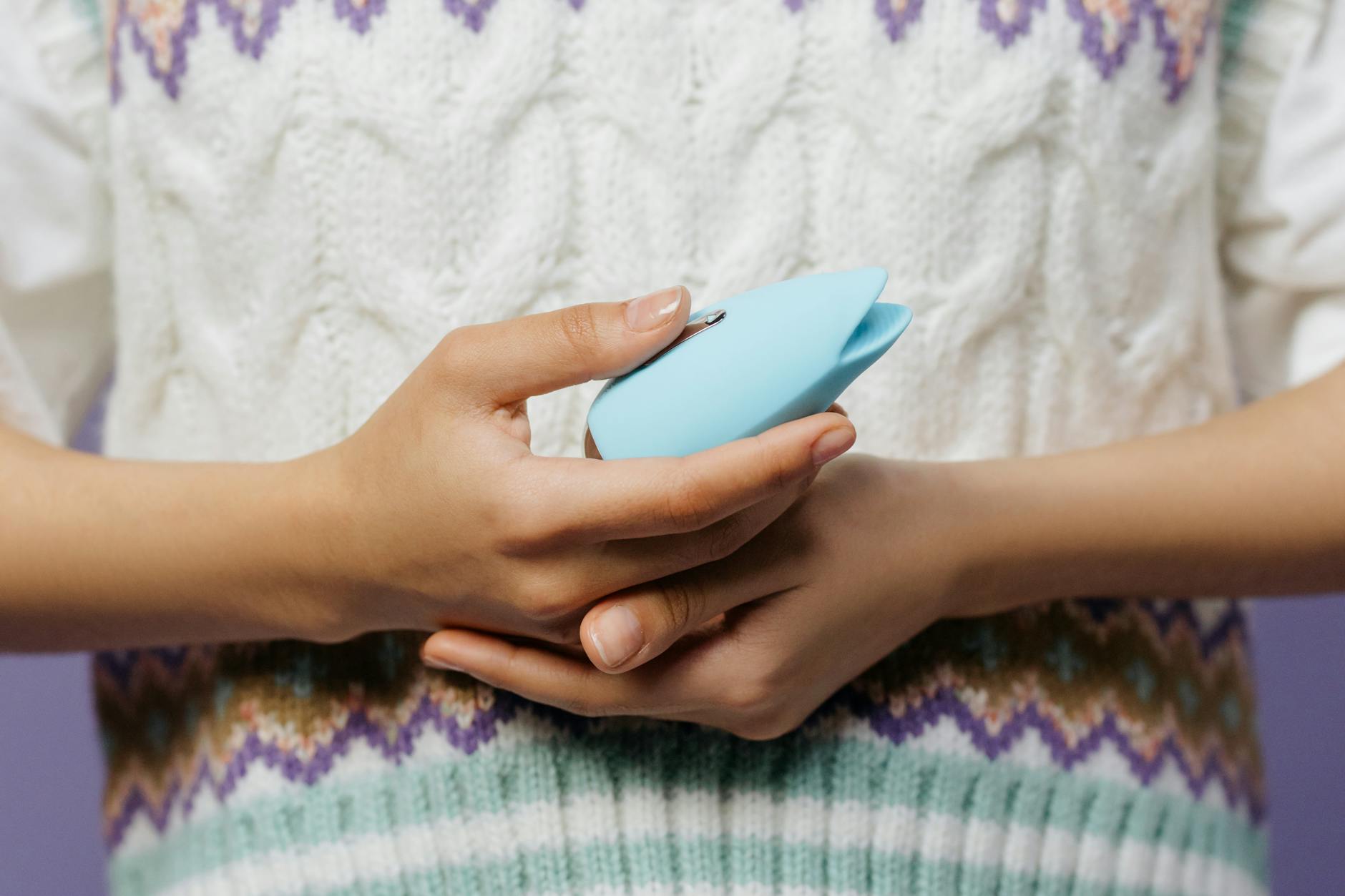
The fear that stops people from trying
Honestly, this is the question I hear most often. Someone's curious about lemon vibrators or clitoral vibrators in general, then they pause and ask: won't I go numb? Won't my body get used to it and stop responding to anything else? It's not a silly worry. It's a real concern, backed by enough half-truths to feel legitimate. Let's separate what's actually happening from what's just urban legend.
The short version: sensitivity doesn't disappear permanently. What does happen is more nuanced, more reversible, and way more manageable than most people think.
What "numbness" actually is
When you use a lemon clitoral vibrator repeatedly, your nerve endings don't die. That's not how nerves work. What happens instead is something called habituation. Your brain stops registering constant stimulus as novel or important. It's the same reason you stop noticing the hum of your refrigerator after 30 seconds, or why you can't feel your clothes on your skin right now until I pointed it out.
This is a neurological adaptation, not damage. It's your nervous system doing its job efficiently.
Here's the critical part: habituation is temporary and context-dependent. Your clitoris won't stay numb to a partner's touch just because you used a lemon vibrator yesterday. The sensation nerves themselves haven't changed. Your brain has just temporarily prioritized other input. That's completely different from permanent desensitization.
Research on this is limited, partly because funding for pleasure research is criminally underfunded. But the clinical data we do have, along with the lived experience of millions of people using vibrators regularly, shows that the "numb forever" outcome doesn't happen. What does happen is people sometimes notice a pattern: after heavy vibrator use, they might need a day or two of lower-intensity touch to reset their baseline.
Why the fear feels real
Three reasons this myth persists.
1. You're comparing different sensations. Using a suction toy like the Lem gives you a specific type of stimulation. Your partner's hand or tongue delivers something entirely different. If the vibrator feels more intense, that doesn't mean other touch is gone. It means you're comparing high-power to baseline. Of course baseline feels quieter by comparison. That's perception, not nerve death.
2. Your arousal state matters more than you think. If you're tired, stressed, or emotionally distant when you try another type of touch, you'll register it as less intense. That has almost nothing to do with the vibrator and everything to do with your parasympathetic nervous system. Blame life, not the toy.
3. You might actually have a baseline sensitivity that was always there. Some people need more sustained stimulation to climax. They don't discover this because of vibrators. They discover it when they use one. Then they mistakenly think the vibrator caused it. The tool revealed something already present.
There's also a gender component here. For decades, women's pleasure was treated as fragile and easily broken. The vibrator fear is partly inherited from that legacy. We're told our bodies are easily damaged, quick to malfunction. They're not. They're actually remarkably resilient.
The actual research on vibrator use and sensitivity
A 2009 study in the Journal of Sexual Medicine surveyed over 2,000 women who used vibrators. The finding: no significant loss of sensation among regular users. Most users reported stable or improved sexual function over time.
A more recent analysis (2017) in Sexual Medicine Reviews found that vibrator use correlates with better sexual satisfaction overall, not worse. Again, no evidence of permanent numbing.
The mechanism researchers point to is actually the opposite of what people fear: consistent vibrator use can strengthen the neural pathways involved in pleasure. You're essentially practicing. Your brain gets better at recognizing and processing that stimulation. That's not numbness. That's competence.
There's one population where temporary desensitization is real and documented: people using vibrators for hours daily over months. That's outlier territory. Most people use a lemon vibrator for 10 to 20 minutes, a few times a week. That's not going to cause persistent sensation loss.
How to protect responsiveness (practical strategies)
If you want to use lemon sexual toys regularly and stay responsive to all kinds of touch, here's what works.
Vary the input. Don't rely solely on vibration. Alternate between vibrator sessions and manual stimulation. Use different patterns and intensities on the vibrator itself. Your nervous system thrives on novelty. Give it some.
Build in rest periods. You don't need to stop using vibrators. Just space them out. If you notice you need stronger stimulation to climax after a session, take two to four days off. Your baseline recalibrates quickly. This isn't forever. It's a rhythm.
Use lower settings more than higher ones. The Lem and other quality clitoral vibrators have multiple intensity levels. People often jump straight to level 5 or 6 because it feels powerful. But you'll stay more responsive if you spend most of your time at levels 1 through 3. Save the high settings for occasional variety. This is especially true if you've already noticed a sensitivity pattern.
Pay attention to arousal building. Don't rely on the vibrator to do all the work. Spend 10 to 15 minutes on foreplay, fantasy, or partner touch before introducing the toy. Your whole nervous system gets engaged that way, not just the localized nerves. The experience stays richer.
Stay hydrated and manage stress. This sounds unrelated, but sensitivity is partly physiological. Dehydration, sleep deprivation, and chronic stress all flatten sensation. A vibrator won't repair those. Taking care of the basics does more for your responsiveness than any toy strategy.
The comparison trap (and why it doesn't matter)
Here's something I see happen with couples: one partner uses a vibrator solo and loves it. Then they use it with their partner and the partner feels threatened or insecure. The worried partner worries that the vibrator is "doing more" than they can. So they avoid it. And then the using partner worries they're ruining their body by using the toy.
The trap is assuming the vibrator is trying to replace the partner. It's not. A lemon clitoral vibrator and human touch are both valid inputs. Your body is not a zero-sum system. You don't have a finite pool of sensation to distribute. Using a vibrator doesn't spend down your responsiveness to touch.
If anything, exploring your pleasure with a tool often makes partnered sex better. You learn what works. You get more confident communicating about sensation. You're less anxious. That's the opposite of numbness.
When actual desensitization might signal something real
If you're noticing persistent loss of sensation that doesn't recover after a few days off vibrators, the vibrator probably isn't the culprit. Consider instead:
Hormonal shifts (thyroid, testosterone, estrogen imbalances all affect sensation). Medication side effects (some antidepressants, blood pressure meds, and antihistamines genuinely do dull sensation). Chronic stress or depression (these numb you faster than anything external). Relationship tension (emotional distance makes everything feel muted). Pelvic floor dysfunction (tight or overly relaxed muscles change sensation patterns).
A vibrator doesn't cause these. But it might expose them. Which is useful information.
The deeper truth
Your clitoris is not fragile. Sensation is not a fixed resource. Pleasure doesn't work like a gas tank that runs dry if you use it too much. These are metaphors we inherited from cultures that weren't invested in women's pleasure in the first place.
The reality is messier and more hopeful. Your body adapts. Your nervous system recalibrates. You stay responsive because responsiveness is built into how humans work. The lemon vibrator, the Lem, any quality clitoral vibrator is a tool. Tools don't break you. They help you explore.
Use them. Vary your input. Take breaks when you need them. Pay attention to what actually feels good rather than what you think should feel good. That's it.
People also ask
Can using lemon vibrators too much permanently numb your clitoris?
No. Your nerve endings don't die from vibration. What does happen is temporary habituation. Your nervous system adapts to repeated stimulus and may register it as less intense for a bit. But that resets. Taking a few days off, varying stimulation types, and using lower settings can all help maintain baseline sensitivity. The clinical evidence shows vibrator users have stable or improved sensation over time, not permanent numbness.
How long does it take sensation to come back after using a vibrator a lot?
If you've been using vibrators daily at high intensities, you might notice reduced sensation for 2 to 7 days after taking a break. Most people see their baseline return within a week. If it takes longer, something else is likely going on (stress, hormones, medication). If you spread vibrator use across the week rather than clustering it, this recalibration happens automatically without noticeable dips.
Does using a clitoral vibrator make it harder to orgasm from partner touch?
Not inherently. If you're only experiencing orgasm through intense vibration and ignoring other forms of touch entirely, you might narrow your responsiveness to that specific input. But that's a choice about how you use the tool, not an inevitable outcome. People who alternate between vibrators and manual or partnered stimulation maintain responsiveness to all of it. Your body is plastic. It responds to what you practice.
Is the Lem or other lemon sexual toys safer for sensation than other vibrators?
Suction-based toys like the Lem work differently than traditional vibrators. They stimulate through gentle pulsing rather than intense buzzing, which many people find less fatiguing over time. Some users report staying more responsive with suction toys. But the biggest factor isn't the brand or type. It's how often you use it, at what intensity, and whether you vary your stimulation. Any quality toy used mindfully protects sensation.
Why do some people need stronger vibration after using vibrators regularly?
This is usually habituation, not damage. Your nervous system gets efficient at processing the specific stimulus. You need novelty to register intensity the same way. Solution: take breaks, use lower settings most of the time, vary patterns, and mix in non-vibrator stimulation. Your threshold doesn't get stuck. It resets with variation.
Can you lose sensation from using vibrators during pregnancy or after birth?
Physical changes during and after pregnancy are real (hormones, pelvic floor changes, tissue shifts). But vibrator use doesn't accelerate this. If you're noticing sensation changes postpartum, they're likely from hormonal shifts, sleep deprivation, or pelvic floor tension, not from the toy. In fact, how to use lemon vibrators when you prefer gentler pressure covers exactly this: many postpartum people find lower-intensity tools more comfortable and responsive than before.
What actually matters
The fear of losing sensation is legitimate enough. But it's usually overblown. Your body is more resilient than the worry suggests. Use lemon vibrators. Vary your approach. Pay attention to how you actually feel rather than how you think you should feel. Stay curious. The evidence suggests you'll stay responsive, probably more so than if you never explored at all.
If you have specific concerns or notice changes that don't improve with rest, reach out to a healthcare provider. But for most people, most of the time, the vibrator isn't the problem. It's one tool among many. Your pleasure can handle it.