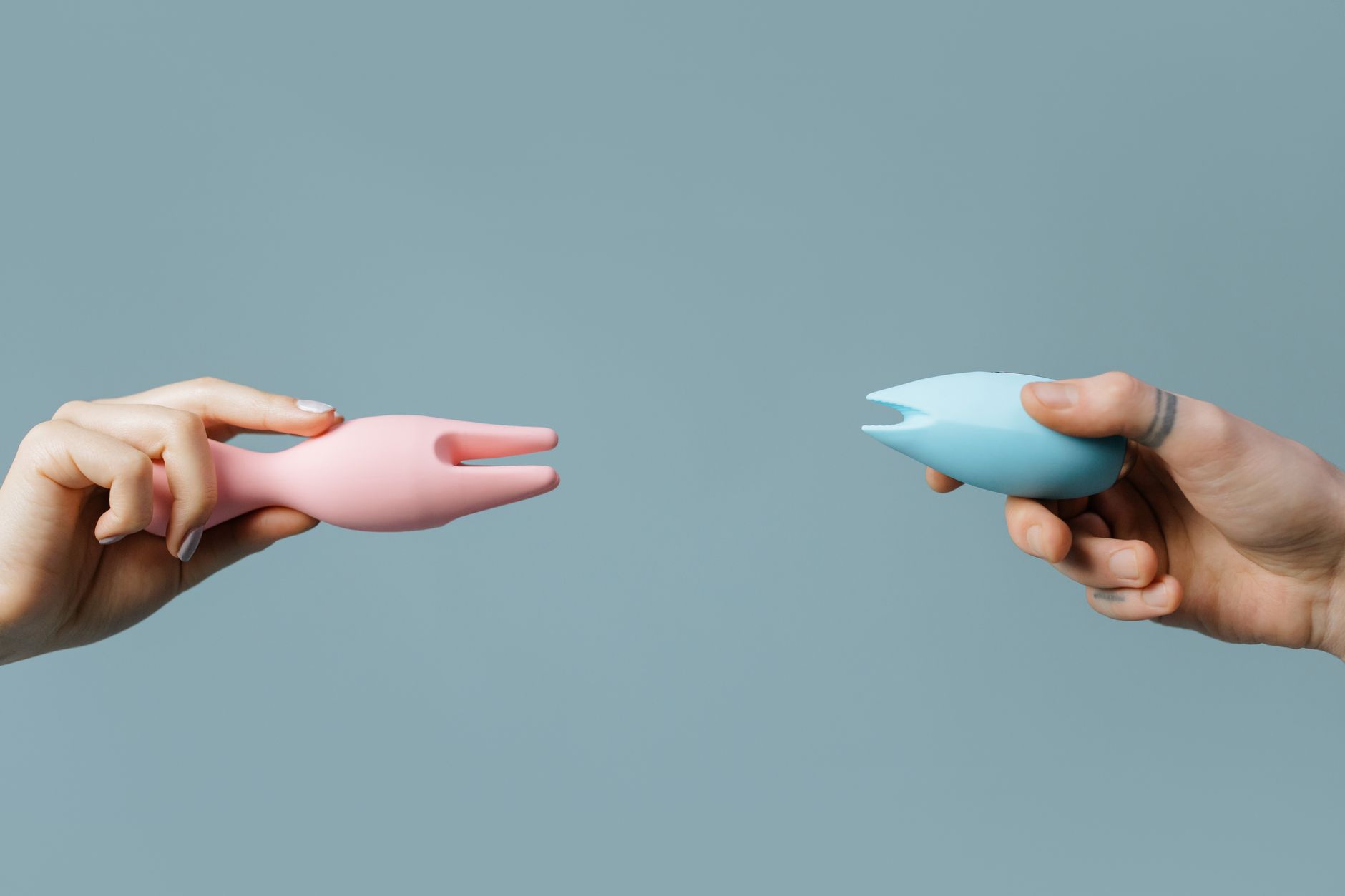
How to introduce lemon vibrators when your partner hasn't asked for them
Here's the thing about bringing toys into a couple's sex life. You're not actually proposing the toy. You're proposing a conversation about desire, curiosity, and what you both might want to explore. That distinction changes everything.
Most couples sit on this idea for way longer than they actually need to. Fear takes up space. Someone worries the other person will feel insulted, threatened, or replaced. Someone else thinks bringing it up will land like criticism ("Our sex isn't enough"). And honestly? Both fears make sense. But they're almost never the actual response.
The conversation opener that actually works
Don't lead with the toy. Lead with your own curiosity.
Try: "I've been reading about how couples use vibrators together, and I'm curious what you'd think about trying something like that. No pressure at all. Just interested in what you'd feel about it." That's it. You're naming an interest, not making an accusation.
Why this works: You're owning your curiosity (not blaming their body), you're asking a question (giving them agency), and you're explicitly killing the pressure (removing the sting). This sounds short because it is. Resist the urge to justify or over-explain.
What happens next is usually silence. That's fine. They might say "Yeah, maybe" or "I don't know" or "What kind of vibrator?" All of those are wins. The thing they probably won't say is "How dare you," even if that's what you secretly feared.
Why lemon vibrators work better for couples than you'd expect
The reason couples often hesitate isn't really about the toy. It's about performance anxiety. Will I do it right? Will they think I'm inexperienced? What if the stimulation is too much and I can't keep up?
A lemon clitoral vibrator like the Lem changes that dynamic because it's not about you. The suction pattern does the work. There's no comparison, no sense that one partner should be "better" at it. You're both just... experiencing something. Together.
That actually matters. Couples who introduce toys often report that the pressure drops. Because the toy is doing one job, and you're free to do yours: kissing, touching, making eye contact, whatever else feels good.
A lot of my clients say it's the first time they've felt like partners in pleasure rather than performers or audiences.
Choosing which lemon vibrator to start with
If you're new to toys together, you want something that serves both of you equally. That means: easy to control, forgiving if the pressure is too much, and not loud enough to disrupt the intimacy.
Lemon vibrators are designed exactly for this. The Lem, for example, has multiple intensity levels so you can start gentle and build. That takes pressure off both partners. Your partner isn't sitting there white-knuckling while you figure out the rhythm.
Also consider size and shape. For couples, something that fits comfortably whether you're alone together or side-by-side matters more than a toy that's theoretically "better." You want something that feels natural to hold, not something that feels like a tool you're fumbling with.
Skip anything that requires app control or multiple buttons your first time. You want to be present, not troubleshooting tech.
The first time actually using it together
Timing matters. Don't introduce it when you're already mid-sex and things are flowing. That's like adding a new ingredient to a dish that's already cooking. Pick a time when you're both relaxed, maybe when you know you have space and time.
Start slow. Like, slower than you think. One or two sessions exploring it solo first isn't cheating. It's research. You want to know how it feels, what intensity works for you, and what the settings do. That way when you use it with your partner, you're not simultaneously learning and performing.
When you do use it together, let your partner control it at first. Seriously. That solves half the anxieties because they can set the pace and pressure they actually want. Then you can take turns or settle into whatever feels natural.
Don't expect it to be the best sex you've ever had. Expect it to be interesting and a little awkward and kind of fun. The best version is often the second or third time.
What actually changes when couples use toys together
One thing that shifts: communication gets less loaded. When you're figuring out a toy together, you have to talk about what feels good. "A little slower?" "That one?") "Try this setting." It's practical conversation, not vulnerable confession. And suddenly you're both practicing saying what you want.
Another thing: permission expands. If your partner brought up a toy, then you get to want things too. The door swings both ways. That often leads to a few months of "Oh wait, I actually want to try that too." Which is fine.
The pleasure usually deepens too, even if the first time is weird. Knowing your partner is curious about your body, wants to explore with you, and is willing to try something that might be awkward... that builds trust in a specific way. It's not romantic. It's practical intimacy.
Handling the hiccups
What if your partner says no? That's real and it's okay. Respect it without resentment (which takes actual practice, not just saying it). Sometimes a "no" means "not right now" and sometimes it means "not at all," but either way, pushing turns a conversation into a wound.
What if you try it and it feels weird or too intense? Stop. You don't need to have a debrief or worry that this means something is broken. It just means this particular thing isn't the fit right now. That's useful information.
What if the intensity is uncomfortable? How to Use Lemon Vibrators When Intensity Feels Uncomfortable covers this in depth, but the quick version: start at the lowest setting and stay there until it feels different, not wrong.
What if your partner loves it and wants to use it every time? You're allowed to have preferences about that too. "I love this sometimes, but I also love other ways we connect" is a complete sentence.
Keeping it part of your dynamic
A toy doesn't replace anything. It's an addition. Some couples use lemon vibrators regularly. Others pull them out once every few months. Neither is wrong. The key is that you both feel agency.
One practical thing: keep it accessible but not out on the nightstand staring at you both. A drawer, a bag, somewhere easy to grab but not omnipresent. That keeps it feeling like an option, not an expectation.
Check in periodically. "Still like using this?" or "Want to try something different?" isn't a lot of conversation, but it keeps things from defaulting into habit.
And if one of you isn't into it after trying, that's data. You tried something together, you learned about each other's wants, and you move forward. That's the actual win.
When you're using it solo too
One thing worth knowing: if you're using lemon vibrators on your own, that can actually strengthen your partnership around sex. You learn your own body. You know what feels good without the layer of managing someone else's experience. Then when you come together, you're both coming from a place of knowing what you want.
That's not a secret from your partner. It's the opposite. If they know you're comfortable with your own pleasure, that often makes them more comfortable with sharing it.
The bigger picture
Using lemon vibrators together is rarely the most important thing a couple does. What matters is that you're curious about each other. That you're willing to be a little awkward. That you're not waiting for perfect conditions or perfect confidence before you try.
Most couples who successfully introduce toys together say the same thing: the toy was fine, but the fact that we were willing to do something new together was the real pleasure.
People also ask
Will using a vibrator with my partner make them feel like I don't find them attractive?
No, but I understand why you'd worry. The opposite is usually true. Most partners feel flattered that you want to explore more pleasure with them, not less. If your partner is the type to take it personally, that's less about the toy and more about how they experience closeness. You might explore that dynamic with them before introducing a vibrator, because a toy won't solve insecurity. It'll just give the insecurity a place to attach.
What if I want to try it but my partner is resistant or skeptical?
Respect the "no" without abandoning your own interest. You can say something like "I get that you're hesitant. I'd love to explore this, but not without you being on board. Can we talk about what makes you uncomfortable?" Sometimes resistance is about the toy. Often it's about vulnerability or control or fear of doing it "wrong." That conversation matters more than the vibrator. If resistance stays firm, let it be. You're not supposed to convince your partner into sexual experiences.
How do I know if my partner is faking enjoyment or just being polite?
Watch their body, not their words. Are they relaxed? Making eye contact? Asking questions or exploring with you? Or are they stiff and quiet? The polite version often looks passive. Genuine interest involves some active participation. And if you're unsure, ask directly: "Are you into this or just humoring me?" That's a vulnerable question, but it's the right one.
Should we start with the smallest or least intense option?
Start with the lowest intensity setting, yes. Size is less important than you think. Most lemon clitoral vibrators are small by design. What matters is intensity and how the stimulation feels, not whether it's the tiniest possible option. Your partner can always move to something with more power later.
Is it weird if my partner wants to use it solo after we try it together?
Not at all. A toy is a tool. If it feels good, it feels good alone or partnered. Some partners love that their spouse gets to explore pleasure independently. Others feel weird about it. Neither is objectively right. Have the conversation if it comes up.
How often should we be using lemon vibrators if we introduce them as a couple?
Whatever frequency feels good to you both. There's no wrong answer. Some couples use them every time they're sexual. Others pull them out once a month. The risk is that you default into always using it, which can make other ways of being together feel "less than." Mix it up. Let it be one option in your toolkit, not the entire toolkit.
Moving forward
Introducing a lemon vibrator to your partnership doesn't have to be a big deal. It's a conversation, a small decision, and then you try something. The fact that you're reading this means you're already doing the work most couples skip: you're thinking about it first. That thoughtfulness usually translates into a better experience than just surprising someone.
Your partner probably won't reject you. Your relationship probably won't change, except that you'll both feel a little more seen. And if it turns out this isn't your thing, you've still practiced asking for what you want and saying no to what you don't. Those skills matter a lot more than any single toy ever will.
If you need more support navigating this conversation or working through hesitations, reach out. Connection is worth the awkward moment.
Get in touch if you want to talk through your specific situation.