Let's start with the honest part
Your partner brought it up. Maybe they saw something online, or read an article, or just got curious. And now you're sitting with that nervousness. That's completely normal. The fact that you're thinking about this instead of dismissing it means you're already halfway to somewhere good.
Here's what I see clinically: nervousness about introducing vibrators isn't really about the toy. It's about what the toy means. "Does this mean I'm not enough?" "Will they prefer it to me?" "Am I supposed to want this too?" Those are the actual questions underneath. And they deserve real answers.
What's actually happening beneath the nervousness
There are three things usually tangled up together when someone gets nervous about a partner suggesting a toy.
First, there's the old cultural script that says sex toys are a sign of relationship failure. They're not. They're a sign of curiosity, communication, or just variety. A toy doesn't replace you. It does something different.
Second, there's the performance pressure. If your partner wants a lemon vibrator or any clitoral vibrator, there's often this spiral: "They want this because what I do isn't working." That's rarely true. Want and insufficiency are different things. Someone can love exactly what you do and still be curious about something new. These aren't mutually exclusive.
Third, there's the practical fear. "What if I don't like it?" "What if it's awkward?" "What if I feel replaced?" Those are real, and they're worth naming before you start.
The conversation before the toy arrives
Don't let your first conversation about this happen during sex. That's when nervous systems are activated and words get tangled.
Pick a moment when you're both calm, clothed, and not trying to solve anything else. Say something like: "You mentioned wanting to try a vibrator. I'm interested, but I'm also a little nervous about what that means. Can we talk about it?" That's it. You're not committing. You're not saying no. You're saying yes to understanding.
Then listen to what your partner actually says, not what you think they mean. Ask questions. "What drew you to the idea?" "How do you imagine using it?" "Do you want this just for yourself, or with me?" The answers matter because they tell you what's really happening.
Most importantly: tell them your concerns too. "I'm worried this means you think I'm not enough." Or: "I'm nervous about feeling replaced." A partner worth keeping will hear that and respond with reassurance, not defensiveness. If they get defensive, that's information too, and it's worth sitting with that separately.
Why lemon clitoral vibrators specifically work for nervous partners
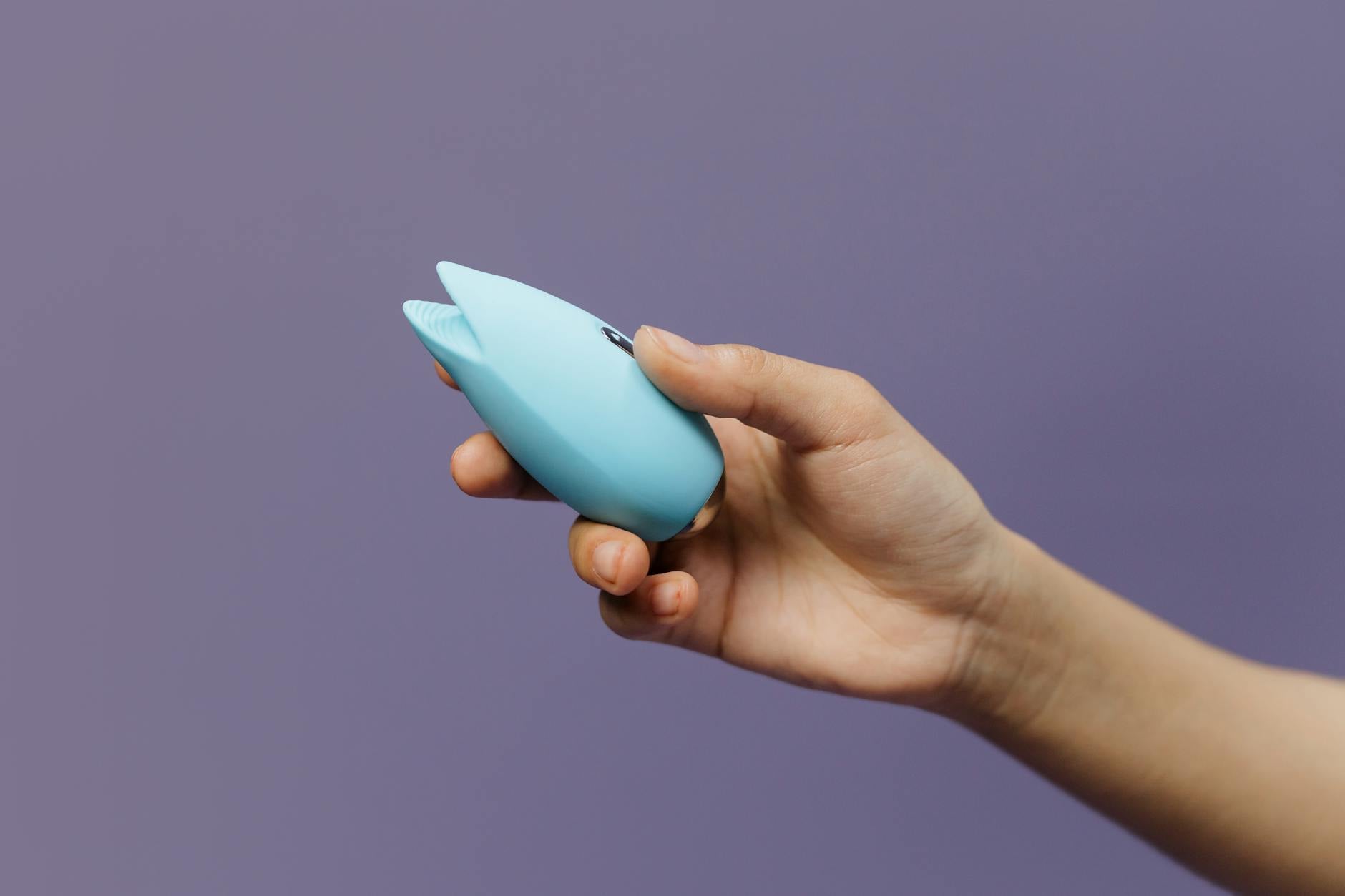
If your partner is suggesting a lemon vibrator or a similar clitoral vibrator from Lemon Vibrators Shop, there's actually a practical reason that works well for this exact situation.
Clitoral vibrators like the Lem use suction and air-pulse patterns instead of traditional vibration. That means they stimulate differently than hands or a partner ever could. They're genuinely complementary, not competitive. You can hold it. Your partner can hold it. You can take turns. It becomes a tool you're using together, not something that isolates anyone.
The other thing is they're external. There's no performance anxiety, no depth, no positioning complications. It's straightforward. Your partner can use it on themselves while you're inside them, or they can use it while you're using your hands or mouth. The variables are simpler, which means the nervousness has less room to hide.
The first time: practical steps that actually work
Read the instructions together. I know that sounds unsexy, but it's not. It's intimate and practical. You both learn what it does. You can laugh at the diagrams. You can ask questions. You demystify the object together.
Start alone first. If your partner is comfortable with it, let them explore on their own for a couple of sessions before you're involved. This gives them a chance to figure out what they like without you watching, without pressure, without your nervousness in the room. They come back with information about what works. That's useful.
When you do use it together, start small. Maybe you're kissing and touching, and then one of you introduces the vibrator. Keep your hands on each other. Keep talking. "Does this feel good?" "Do you want more intensity?" Those conversations shrink the nervousness because you're collaborating, not performing.
Set a clear intention. You don't have to use it every time. You don't have to have an orgasm from it. You don't have to change anything about what was working before. It's an option, not a requirement. That permission matters for nervous systems.
When nervousness shows up mid-experience
Sometimes the nervousness doesn't hit until you're actually in it. Your partner is using a lemon vibrator, and suddenly you feel strange. Sidelined. Weird. That's okay. It means you should pause.
Touching your partner while they're using a toy is a game-changer. Put your hand on their back. Kiss their neck. Stroke their hair. Your presence is still there. You're not replaced. You're just not the sole source of stimulation. And that's a different thing.
You can also ask to hold the vibrator. If they're comfortable with it, you can be the one controlling it. That gives you agency. You're choosing the intensity, the pattern, the rhythm. For some nervous partners, that control is what transforms the experience from "they want this instead of me" to "we're figuring this out together."
If something genuinely doesn't feel right, say so. "I need to stop for a minute." Full stop. A good partner pauses. You don't have to figure it out in the moment. You can take a break, come back to the conversation, and adjust.
What changes and what doesn't
Using a lemon vibrator or any clitoral vibrator won't change your partner's feelings about you. It won't make them want you less. It might change how quickly they orgasm, or what kind of stimulation they prefer in that moment. That's information, not rejection.
What often happens is the opposite of what nervous partners fear. Once the toy is introduced and it's not weird or threatening, sex often becomes less tense. Your partner isn't working so hard to get there. You're not performing so hard to make it happen. The lemon sexual toys or other options become just another variable, like position or pace.
You might also find that you enjoy it. Not everyone does, and that's fine. But some nervous partners discover that watching their partner experience pleasure with a new tool is actually hot. That the permission to try new things extends to you too. That the relationship got deeper because you both took a risk.
The ongoing conversation
Introducing a vibrator isn't a one-time event and then you move on. It's a conversation that keeps evolving. Check in after a few times. "How are you feeling about this?" "Do you want to keep using it?" "Is there anything you want to adjust?"
Your nervousness might ease faster if you frame it as an experiment rather than a permanent change. You're trying something. You'll see how it goes. If it works, great. If it doesn't, you have information. That lightness makes a huge difference.
You can also read together. Your partner might appreciate knowing that lemon vibrators and clitoral vibrators are genuinely designed to complement partnered sex, not replace it. The reassurance isn't just emotional. It's technical. The tool was made for exactly this.
When to get help
If the nervousness doesn't ease after honest conversation and a few attempts, or if it turns into conflict, that's worth bringing to a relationship therapist. Sometimes nervousness about toys is actually nervousness about something else. Trust. Communication. Desire mismatch. A good therapist can help you figure out what's underneath and work through it together.
You don't have to figure this out alone. And you don't have to force yourself to be comfortable with something that doesn't feel right. The goal is genuine connection, not performance compliance.
FAQ
Can I use a lemon vibrator if I've never used any toy before?
Absolutely. Clitoral vibrators are actually a great entry point because they're external, intuitive, and you don't need to know anything specific going in. Start with a lower intensity setting and work your way up. You might surprise yourself.
What if my partner orgasms with the vibrator but struggles without it?
That's really common and usually not a problem. It means they've found a tool that works for their body. Some people's nervous systems respond better to certain types of stimulation. The goal isn't for you to do exactly what the toy does. It's for you both to enjoy sex together, however that works.
Should I be worried if my partner wants to use the vibrator every time?
Not necessarily. Some people get really into what works and want to stick with it. Over time, most people vary. If it feels like the only way they're interested in sex, that might be worth a conversation about desire and variety. But wanting something you enjoy isn't a red flag.
Is nervousness about toys normal, or does it mean something's wrong in our relationship?
Nervousness about trying something new is completely normal. It doesn't mean your relationship is broken. It usually means you're about to grow a little, and growth is uncomfortable. If the conversation about it goes smoothly and you both feel heard, that's actually a sign the relationship is solid enough to handle change.
Can using a vibrator make me feel less important to my partner?
It can feel that way, but feelings and facts are different here. A vibrator is a tool, like a hand or a mouth. It doesn't have emotional significance unless you assign it. If your partner wanted to feel closer to you, they're still choosing to do this with you. That matters.
What if I try it and hate it?
Then you hate it. You tell your partner, and you don't use it. Or you try it again in a different context. Or you use it solo and your partner uses theirs. There are options. Nothing about trying something once means you're locked into it.
Introducing a lemon vibrator or exploring clitoral vibrators when you're nervous starts with honesty, moves through conversation, and lands in curiosity. It's not about forcing comfort. It's about building it together, one small step at a time.