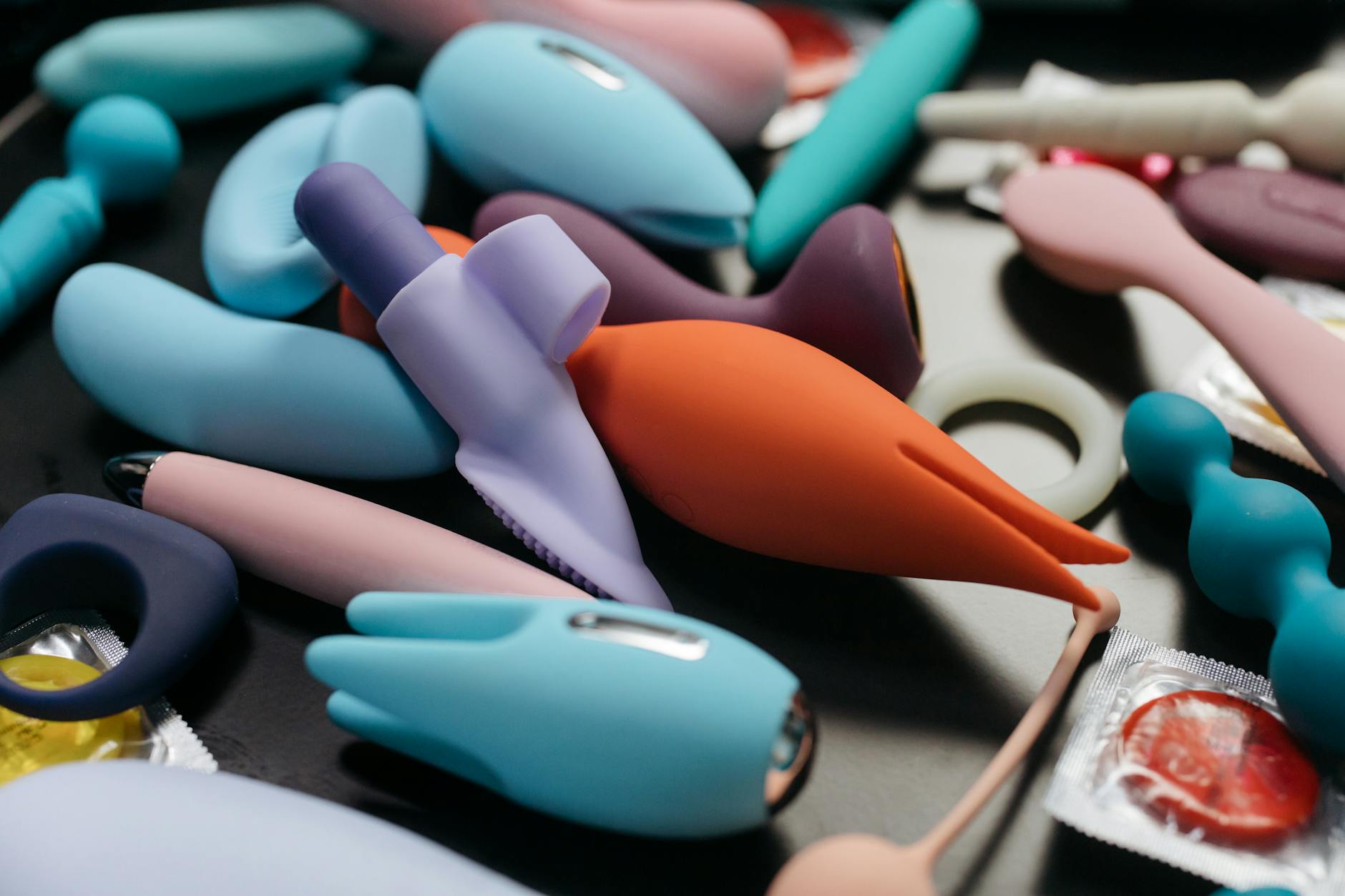
Let's name what's actually happening
Your partner doesn't want you using a toy. Not during solo time, not together, not ever. And now you're stuck between two things you didn't sign up to choose: your pleasure or the relationship peace.
Here's the thing I hear from people in this exact position: the resistance isn't usually about the toy itself. It's about what they think the toy means.
The real fear underneath the "no"
When a partner says "I don't want you using vibrators," what they're often actually saying is one of these:
"I'm worried I'm not enough." He thinks a lemon vibrator means you're unsatisfied with him, that your body has moved on, that he's failing at his job. This one's rooted in anxiety about adequacy.
"This feels like a threat to my role." The toy becomes a symbol of your independence or pleasure existing outside the relationship. Some partners experience this as abandonment or infidelity, even when it's completely solo.
"I don't understand it, so it scares me." Sometimes the resistance is just ignorance wrapped in defensiveness. They've never seen a clitoral vibrator work, never understood the mechanism, and the unfamiliar thing registers as wrong.
"I had a bad experience or a belief I never questioned." Religious upbringing, previous relationship trauma, or cultural messaging that toys equal shame can be running the show without your partner even realizing it.
The reason I'm listing these first is simple: you cannot negotiate with a fear your partner won't name. So your first move is to separate the conversation about toys from the conversation about what's actually underneath.
How to have the real conversation
Don't start with "Can I please use a vibrator?" That puts you in the position of asking permission for your own body, and it keeps the fight at the surface level.
Instead, start here: "I've noticed you're resistant to me using toys. I want to understand what's really going on for you, not just hear the no."
Then listen. Actually listen. Not to refute, not to convince him he's wrong, but to understand the specific fear.
If it's inadequacy: "I'm not looking for something you can't provide. I'm looking for a different kind of sensation sometimes. That doesn't replace you. It's a tool, like coffee or a bath. It's not a referendum on you."
If it's about threat or infidelity: "My pleasure alone doesn't diminish my desire for you. In fact, when I feel free to explore what I need, I show up more present with you."
If it's confusion: "Let me show you how it works. Let's demystify this together. I'm not hiding anything."
If it's shame or belief-based: "I understand this feels foreign to you. Can you tell me where that comes from?" Often, naming the origin makes the belief itself seem less inevitable.
The goal here isn't to convince him he's wrong. It's to move from "No" to "I'm scared because..." That's progress. That's a conversation you can actually have.
The boundary you need to set
Here's what I tell every person in this situation: you have the right to your own pleasure, full stop.
If your partner's discomfort with toys is genuinely preventing you from exploring your own body alone, that's not a healthy dynamic. That's control. And I need to be direct about that.
Solo pleasure is not up for negotiation in a healthy relationship. What you do alone is yours. If he doesn't want to be involved, that's reasonable. If he wants to forbid it entirely, that's not.
So set a boundary: "I respect that you might not want to use toys together. But my solo pleasure is non-negotiable. I'm going to explore what feels good for my body, and I'm telling you this because I value honesty in our relationship, not because I'm asking permission."
That boundary shift often changes the entire conversation. Suddenly it's not "Can I?" It's "This is happening, and here's how we handle it together."
If he won't budge, here's what solo work looks like
You don't need his participation for this to be powerful.
One of the biggest misconceptions about lemon vibrators and other clitoral toys is that they're couple's tools. They're not. They're tools, period. Some people use them partnered, some solo.
If you're using a lemon clitoral vibrator alone while your partner isn't interested, the goal shifts. You're not trying to convince him or prove anything. You're getting to know your own body and what brings you pleasure.
Start with a low intensity. Rhythm 1 or 2 on the Lem. Explore without pressure. This isn't performance or proof. This is you and your body.
Many people find that regular solo exploration actually improves partnered sex because they know exactly what they like and can communicate it more clearly. You might say: "I noticed that this particular pattern feels really good. Can we try something similar together?" Now you're inviting him in through your own knowledge, not asking him to guess.
The irony: often when a partner resists toys, and then the other partner starts using them solo and becomes more confident and orgasmic, the resistant partner becomes curious. Not because they've changed their mind, but because they see the actual benefit in their partner.
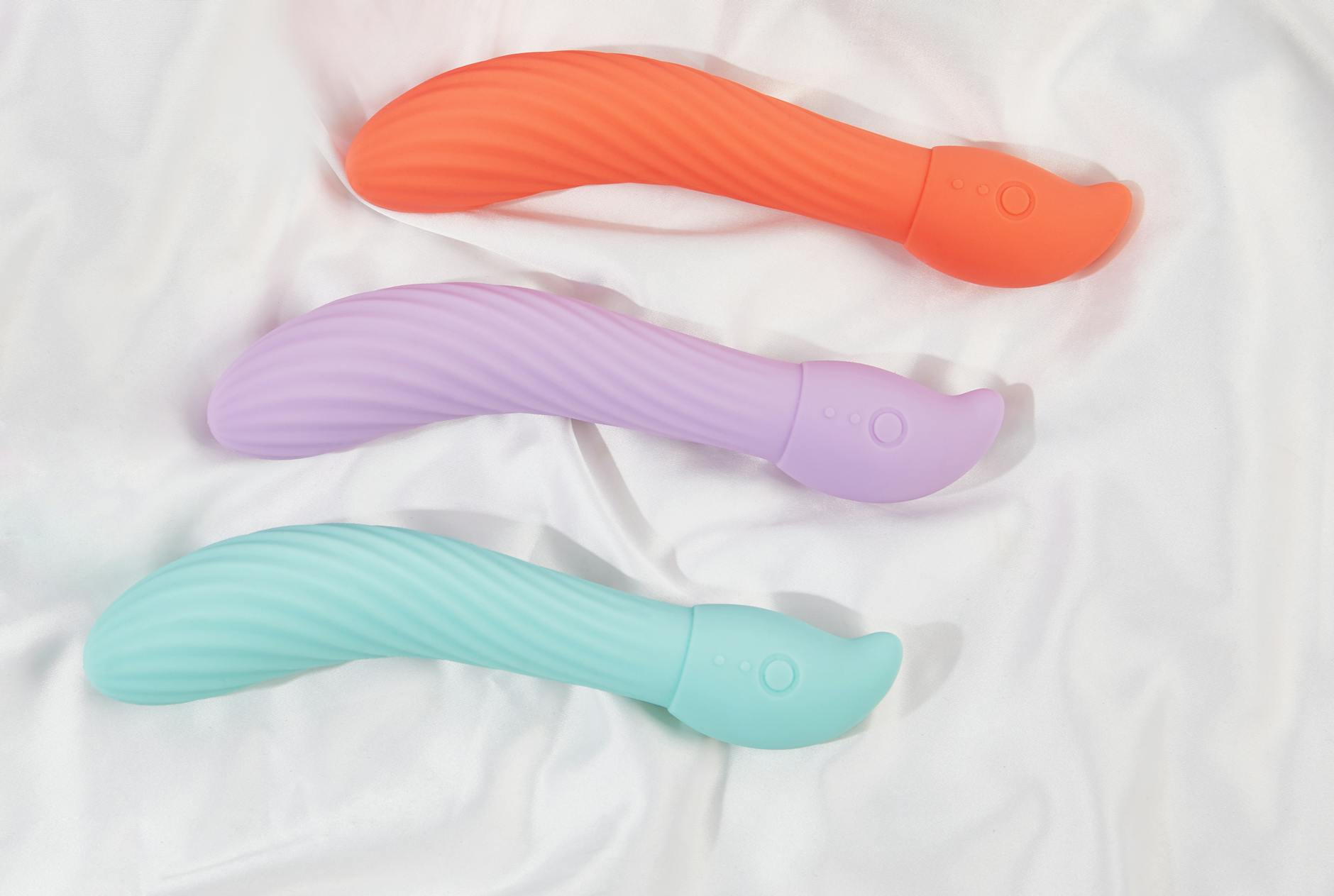
Photo by IFONNX Toys on Pexels
When he's ready to explore together
If your conversation shifts and he becomes open to using lemon vibrators together, start slowly.
The first time is not the moment to prove anything or make it spectacular. It's an introduction. Let him hold it. Let him feel how it works on his hand. There's no performance pressure here.
Many partners feel less threatened when they understand the mechanism. A suction toy like the Lem works totally differently than a traditional vibrator. It's not mimicking anything. It's a sensation-amplification tool. Seeing how it works demystifies it.
Some partners also feel more comfortable if they're the ones controlling it. "Can I use this on you?" is a different power dynamic than "I want to use this myself." If that's where he's at, start there.
Other partners feel less jealous when it's clearly about their pleasure too. "We could use this on you, or we could use it on me, or we could explore how it feels together." Framing it as shared exploration, not your solo need, can help.
The absolute rule: if at any point this becomes something he wants and you don't, you have the right to pause. Pleasure is always consensual, both ways.
When resistance is actually control
I need to name this clearly: if your partner's resistance to you having any solo pleasure, with toys or otherwise, is absolute and non-negotiable, that's a red flag.
Partners who control access to pleasure, isolate you from exploring your own body, or use shame as a tool are showing you something important about the relationship dynamic. That's worth examining with a therapist, preferably on your own first.
If that's your situation, the toy is not the issue. The issue is consent and autonomy in your relationship. Address that first.
But if your partner is fearful, confused, or coming from a place of insecurity that he's willing to work through? That's a different conversation. That's a couple willing to grow together.
The real outcome
Sometimes you use a lemon clitoral vibrator together. Sometimes you use it solo and he doesn't need to be involved. Sometimes he becomes curious and wants to explore. Sometimes it becomes a tool you both enjoy.
The point isn't to convert him or to prove that toys are essential. The point is that your pleasure matters. Your body matters. And a healthy relationship makes space for both of you to explore what you need, even if you don't fully understand each other's needs yet.
Your desire isn't something to apologize for. It's something to honor. If he can't get there with you, that's information too. But you don't need his blessing to explore what feels good.
If you're navigating this and realizing there are bigger issues in your relationship around communication or intimacy, how to talk about lemon vibrators with your partner goes deeper into the conversation framework. And if you're interested in understanding your own pleasure better solo first, why lemon vibrators work better when you feel disconnected from your body might be a useful read.
People also ask
Is it normal for a partner to not want you using vibrators?
It's common. It's not normal in the sense of healthy, but it's a widespread concern. A lot of partners come to resistance through insecurity, outdated beliefs about what toys mean, or lack of understanding about sexuality. That said, resistance is different from reasonable boundary-setting. It's normal for a partner to say "I'm not interested in using toys together." It's not normal for them to forbid you from exploring your own body solo. One is a preference. The other is control.
Should I sneak using a toy if my partner doesn't want me to?
Lying creates a bigger problem than the toy ever could. If you're hiding it, you're building secrecy into your relationship, and that erodes trust far more than the actual vibrator would. That said, if you're at the point where you feel you have to hide your own pleasure, that's worth examining. Is this a relationship where you feel free to be yourself? A conversation with a therapist or counselor might help you figure out what's actually happening.
Can using a lemon vibrator solo actually improve partnered sex?
Yes. When you understand your own body, what feels good, and what patterns work for you, you can communicate that to a partner. You're not longer asking them to guess. You're bringing knowledge to the table. Plus, confidence in your own pleasure is attractive. People who feel entitled to their own satisfaction tend to show up more fully in all kinds of intimacy.
What if we want to try lemon vibrators together but he's nervous?
Start with education. Let him see how it works, hold it, understand the mechanism. No performance, no pressure. The first time is just an introduction. Some partners feel less threatened when they're holding the toy and can control the intensity and sensation. Others feel more comfortable if it's clearly about mutual pleasure. Ask what would feel safer for him and start there.
Does using a vibrator mean I don't want him anymore?
Not at all. A lemon clitoral vibrator isn't a replacement. It's a tool. You might use it when you want a specific sensation, when you're alone, when you want to explore. None of that negates desire for a partner. A partner who's worried about this is dealing with insecurity, and that's worth addressing separately from the toy conversation. His insecurity is real. Your need for pleasure is also real.
How do I know if his resistance is a dealbreaker?
That depends on how much solo pleasure matters to you and whether he's willing to work through his resistance. If he's absolutely inflexible and forbidding you from any exploration alone, that's controlling behavior. If he's scared but willing to have a conversation and move forward slowly, that's different. You get to decide what you need in a relationship. If his needs and yours are fundamentally misaligned, that's information worth having.