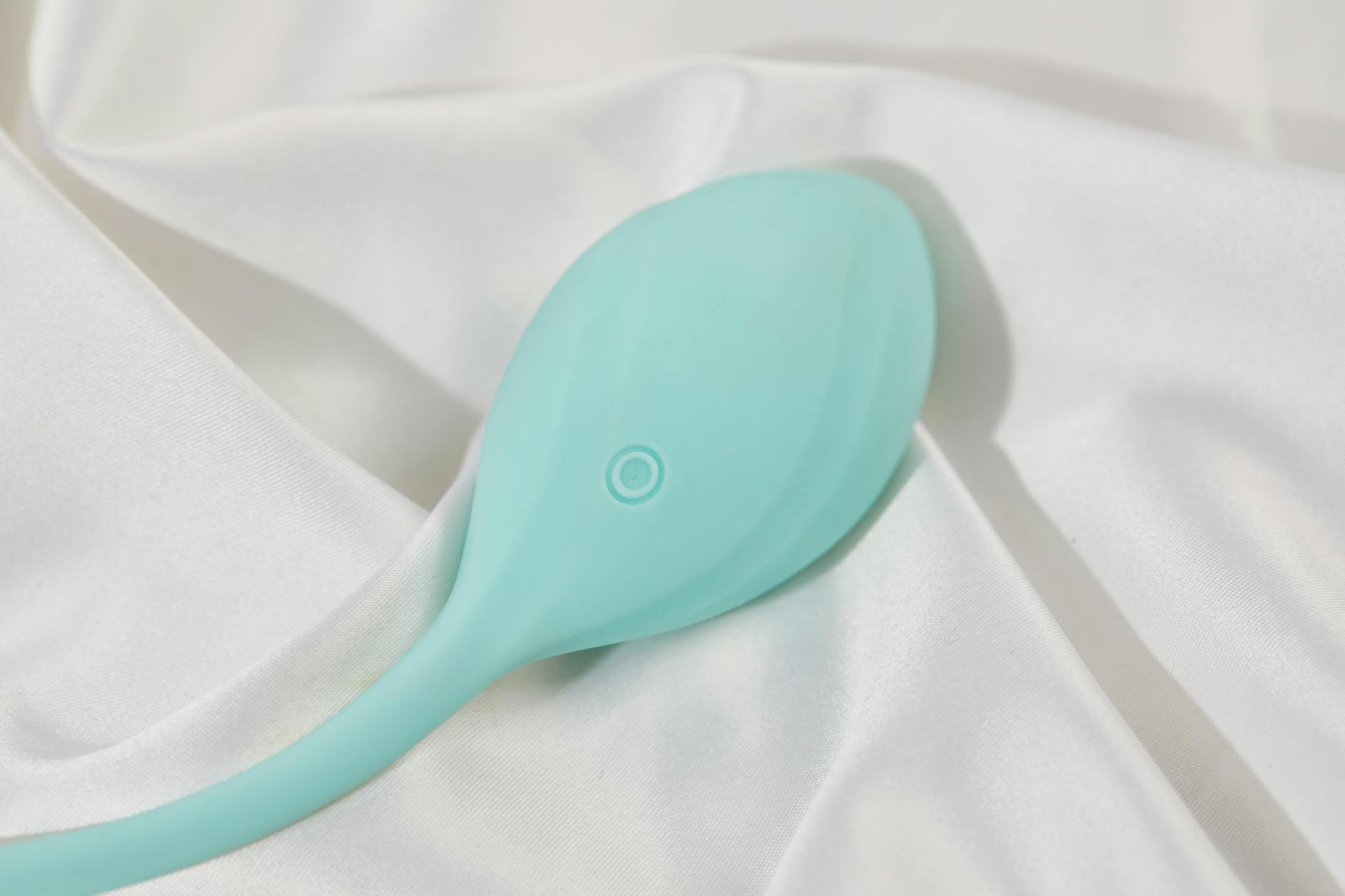
When your medication becomes the third person in bed
You started the antidepressant because you needed to feel better. And you do feel better. Your mood lifts, your anxiety quiets, the fog clears. But then something else vanishes, and nobody warned you: your libido. Or maybe it's the birth control that's been a reliable anchor for years. Or the blood pressure medication that quietly flattened your desire without announcement. Here's the thing nobody says clearly enough: this is real, it's common, and it's not something you just endure.
About 40 to 60 percent of people taking SSRIs report some change in sexual function. Add in birth control, blood pressure meds, and antipsychotics, and you're looking at a huge population dealing with medication-induced desire loss. The pharmaceutical companies know this. Your doctor probably knows this. But many people aren't told until they're already six months in, wondering if they've broken something about themselves.
You haven't. Your medication has done its job. It's just also done this.
What's actually happening in your brain and body
Most desire-dampening medications work through one of two mechanisms. SSRIs increase serotonin by preventing reuptake in the brain. Serotonin is great for mood. It's terrible for arousal. High serotonin tells your nervous system to calm down, to be patient, to not urgently need anything. That's useful when you're spiraling. It's less useful when you want to want your partner.
Birth control and hormone-based medications work differently. They suppress certain hormones or add synthetic ones. Testosterone and estrogen both contribute to desire across all bodies. Suppress them, and desire often follows. Some pills are worse than others. The mini-pill and copper IUD tend to preserve desire better than combined hormonal contraceptives. But individual variation is wild. What tanks one person's libido barely touches another's.
The tricky part: stopping the medication isn't the answer for most people. Depression without meds is worse than depression with a libido problem. Uncontrolled blood pressure is worse than low desire. You're not choosing between sex or your mental health. You're choosing between both problems and just one.
Why lemon vibrators work when medication flattens desire
Let's be direct. When your brain chemistry is working against you, you need a tool that works with your nervous system, not against it. That's where clitoral vibrators come in.
A device like the Lem uses air-suction technology to stimulate the clitoris without requiring much from your body in terms of sensation or responsiveness. Here's what matters: the clitoris has somewhere around 8,000 nerve endings. That's an enormous number of neural pathways dedicated to pleasure. Medication can blunt your desire and your mental arousal cues, but it can't rewire the clitoris itself.
The suction pattern bypasses some of the cognitive barriers. You're not waiting for desire to build the way you used to. You're not frustrated that your body isn't responding. You're receiving direct, consistent stimulation that your nervous system recognizes as pleasure even when your brain isn't cooperating with the usual desire cascade.
Lower-intensity settings on lemon clitoral vibrators are particularly useful here. Instead of needing to get ramped up and ready, you start at pattern one or two. Your body doesn't have to do the heavy lifting. The device does.
The mental shift that actually changes things
Here's what I see happen with my clients who are navigating medication-induced desire loss. They stop waiting for desire to show up like it used to. That's the key shift.
Your old pattern was probably: feel something, respond to it, build, come. Medication often interrupts stage one. You don't feel it, or you feel it faintly, or you feel it only briefly before your brain chemistry pulls the plug.
With a lemon adult toy, you're inverting that. You're not waiting for desire. You're creating the physical sensation first. The brain follows. This isn't backwards or broken. It's just different. And for a lot of people, it's more reliable than waiting for a desire that may not arrive.
If you're with a partner, this changes the conversation too. You're not "trying harder" or "broken" or "just not in the mood anymore." You're acknowledging: my medication is doing what it's supposed to do medically, and I'm using a tool that works with my current neurochemistry. That's not settling. That's pragmatism.
Practical steps for using lemon sexual toys when medications are involved
Start with a realistic timeline. Don't expect your first session to feel like pre-medication sex. Expect it to feel like something. Even subtle pleasure is information. It tells your body that sensation and response are still possible.
Set the environment deliberately. Lower expectations also means raising intention. If you're going to prioritize pleasure alongside medication side effects, do it on purpose. Dim lighting. A locked door. Your phone elsewhere. You're not being dramatic. You're protecting space for something that matters.
Begin with the device on lower settings. The Lem or any quality lemon clitoral vibrator has multiple intensity levels for a reason. Your brain and body are already managing a lot with medication. Let the device meet you where you are, not where you think you should be.
Give yourself time. Three to five minutes of no-pressure exploration is fine. You're not racing toward an orgasm. You're noticing what your nervous system can feel and enjoy right now. Some people find that consistent, low-pressure use with a lemon vibrator over a few weeks actually starts to recalibrate things. Others find that the vibrator becomes a reliable partner to the medication, full stop. Both are good outcomes.
If you're with a partner, consider whether you want them present or absent during this exploration. Some couples find that using a clitoral vibrator together is hot and connecting. Others need solo time to figure out what their body can do now. Neither is wrong.
When to talk to your prescriber
Before you assume the sex side effect is just the price of feeling better, get curious with your doctor. Not all SSRIs hit libido equally. Bupropion and sertraline tend to be kinder to desire than paroxetine or fluoxetine. If you're on something heavy and it's been six months, ask whether switching to a different SSRI is worth trying.
For birth control: copper IUDs and the implant (Nexplanon) typically preserve desire better than combined hormonal pills. If your pill is flattening you, there are alternatives. The conversation isn't "I want off birth control." It's "this particular formulation isn't working for my whole life."
For blood pressure and other medications: sometimes dose adjustment helps. Not always, but sometimes. A prescriber who takes sexual side effects seriously (and not all do) can explore lower doses or alternative medications with similar efficacy.
If nothing medicates changes and lemon vibrators become part of your pleasure routine: great. That's not a compromise. That's adaptation.
Why this matters more than you think
Sex and pleasure aren't just about orgasms. They're about maintaining a sense of embodiment, agency, and connection to yourself and your partner. Medication-induced desire loss often gets minimized. "Well, you're depressed and medicated. Of course your libido is low." That's true. It's also dismissive of something real you're losing.
Using a clitoral vibrator when medication affects your desire isn't cheating around the problem. It's refusing to let the side effect become your whole story. You're taking medication because depression or anxiety or high blood pressure matters to your life. Pleasure also matters. They can both be true.
The goal isn't to get back to how things were before medication. That's unlikely and it's also not the point. The goal is to build a sexuality that works with your current life, your current brain chemistry, and your current needs. A lemon vibrator can be part of that. For many people, it's a crucial part.
People also ask
Can I use a lemon clitoral vibrator while taking SSRIs?
Yes, absolutely. Using a clitoral vibrator while on medication is safe and effective for many people. Since SSRIs can blunt sensation and desire, a device like the Lem that provides consistent, direct stimulation actually works better for many on medication than it would have before. Start on lower settings and give yourself permission to enjoy sensation even if it feels different than before.
Will my sex drive come back if I keep using a lemon vibrator?
That depends on the medication and your individual response. For some people, consistent gentle stimulation over weeks seems to help recalibrate things. For others, the vibrator becomes a reliable tool they use ongoing. Neither outcome means you've failed. Both mean you're choosing pleasure despite medication side effects, which is exactly the point.
Should I tell my partner I'm using a lemon adult toy because my medication tanked my desire?
If you're partnered and having sex together, yes. Not because you're doing anything wrong, but because it's information that changes the dynamic. You might say something like: "My medication is affecting my desire, and I want to stay connected to pleasure and to you. I'm trying this clitoral vibrator to see what works." That conversation is honest and action-oriented. It's not complaining. It's problem-solving together.
Can I combine lemon vibrators with medication changes?
Yes. You can have a conversation with your prescriber about whether switching medications is worth trying while also exploring what works with a vibrator. These aren't either-or. If your doctor says "let's try a different SSRI" and that takes six weeks to adjust, you're not sidelined for six weeks. You're experimenting with tools that work in the meantime.
Why does medication-induced libido loss happen if my brain is supposed to feel better?
Most desire-dampening medications work by increasing serotonin or altering hormones. Serotonin keeps you calm. That's great for anxiety. Calmness is the opposite of the neural state that drives sexual urgency and arousal. Your medication is working perfectly. It's just also working on systems you weren't trying to medicate. Talk to your prescriber if the tradeoff feels unworkable. Sometimes there's a medication that helps both mood and desire.
Is it normal to need a lemon vibrator to have pleasure when you're on medication?
Yes, extremely normal. Up to 60 percent of people on SSRIs experience some change in sexual function. If a clitoral vibrator helps you access pleasure despite that side effect, you're not broken. You're adapting intelligently to your current neurobiology. That's not settling. That's surviving and thriving within real constraints.