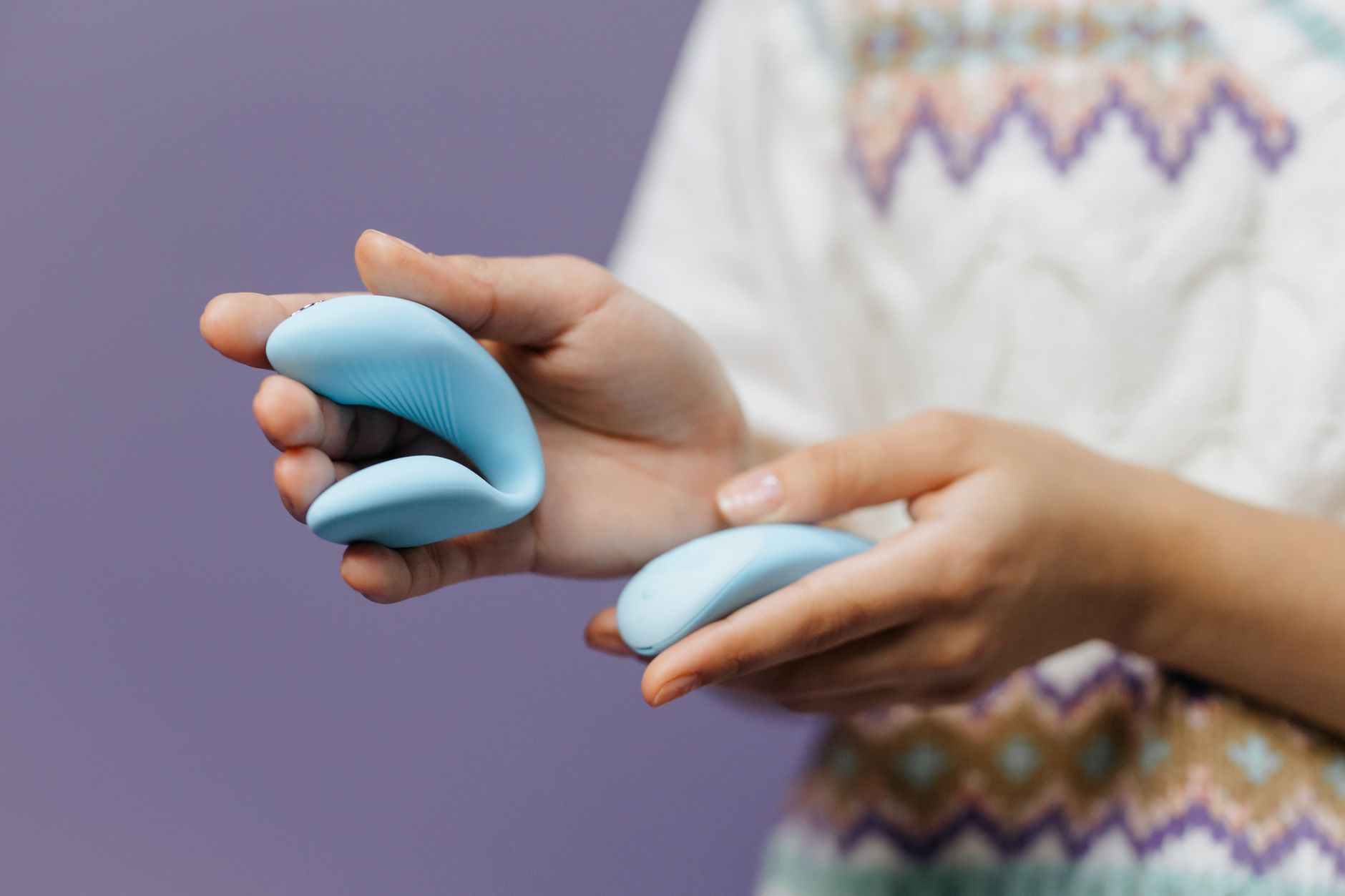
How to Use Lemon Vibrators When Arousal Takes Longer to Build
Let's be real. At some point, most of us notice that arousal doesn't flip on like a switch anymore. What used to take five minutes now takes twenty. Or thirty. And somewhere between noticing the shift and actually doing something about it, we convince ourselves something's wrong.
It's not. Slower arousal is incredibly common, especially as we move through different life stages. The good news? Lemon vibrators actually work better when warm-up takes longer, because they're designed to layer sensation gradually instead of overwhelming from the jump.
Here's what's actually happening, and how to work with your body instead of against it.
Why arousal gets slower (and it's not a defect)
Your brain and body aren't wired for instant arousal at any age. What changes over time is context, hormones, and how much mental noise you're filtering. When you're stressed, distracted, or carrying relationship tension, the neural pathway to arousal gets noisier. Your nervous system literally needs more time to switch from alert-and-managing to open-and-receptive.
This is not weakness. This is you having more to manage. Job, family, bills, history, whatever's happening in your relationship right now. All of it competes for bandwidth.
The second factor is physiological. Testosterone levels drop gradually over time in all bodies. That hormone isn't just about raw desire; it's about the speed of arousal too. Lower testosterone means you need more stimulation, more time, or both to reach the same intensity you used to feel. It's measurable, it's normal, and lemon sexual toys handle it beautifully.
How lemon vibrators solve the slow-warm-up problem
Most vibrators are built for high intensity out of the box. They're loud, they're rumbly, they demand attention. When arousal is building slowly, that blast of intensity can actually derail the process. Your body's like, "Wait, what?" and you're back to square one.
Lemon vibrators, especially the lem vibrator, work through suction and gentle pulsing patterns that match where your body actually is when warm-up is taking longer. You're not trying to force instant intensity. You're layering sensation. Start at pattern one or two. Let your body respond. Shift up when you're ready, not when the toy decides for you.
The suction motion also means you're not getting raw friction stimulation. That's crucial when arousal is slower, because slow arousal often comes with thinner tissue or less natural lubrication. A lemon clitoral vibrator works with that, not against it.
The extended-foreplay advantage you're not thinking about
Here's the thing nobody tells you about slow arousal. It's actually a gateway to deeper, longer-lasting pleasure. When your warm-up takes twenty minutes instead of five, you're not losing something. You're gaining time.
You gain time to actually be present. To notice what your body responds to. To build anticipation instead of rushing through it. When you're using a lemon sucker and you've got extended foreplay on your hands, you can play with patterns. Try pattern three for two minutes. Drop back to pattern one. Build, back off, build again. That rhythm creates multiple small peaks instead of one sharp one, and for a lot of people, multiple small peaks feel better than a single spike.
You also gain time with a partner, if that's part of your sex life. Instead of efficiency sex (which has its place, but isn't the whole menu), you're creating space for touching, talking, eye contact. All the things that actually deepen connection.
Practical timing: how to set yourself up for success
If arousal is slower, budget thirty to forty minutes for sex rather than ten to fifteen. That sounds like a lot, but it means you're not rushing, you're not frustrated, and your nervous system gets the time it actually needs.
Start without the toy. Touch, kiss, whatever gets your attention on sensation for five to ten minutes first. Your brain needs transition time to move from whatever else you were doing. Let that happen before you introduce the vibrator.
When you do introduce the lemon vibrator, begin at the lowest pattern. I'm serious. Not because you're fragile, but because starting low lets your body recognize arousal when it shows up. Sometimes arousal is subtle at the beginning. A low-intensity lemon clitoral vibrator lets you feel that gentle signal and build on it, rather than skipping right past the signal to the bang-you-over-the-head version.
Warm, water-based lubricant helps enormously here. Even if self-lubrication feels fine, adding external lube changes the whole sensation profile in a way that speeds arousal slightly. It's not mandatory, but it helps.
How to adjust intensity when you're building slowly
If you're using a lemon vibrator and arousal is creeping up slowly, your instinct might be to increase intensity to speed things along. Wrong move. Fight that instinct.
Instead, increase duration. Spend three full minutes at pattern two instead of jumping to pattern three after thirty seconds. Your body is slow-cooking, not microwaving. Let it happen. When you feel a shift (more warmth, more responsiveness, clearer sensation), that's your signal to move up one pattern.
Some people benefit from switching between direct clitoral contact and indirect contact. Use your lemon sexual toy on the surrounding area for a minute, then back to the clitoris. That variation keeps your nervous system engaged and actually accelerates arousal more than single-method stimulation does.
Solo versus partnered play when warm-up is slow
If you're exploring this alone, you have total control over pacing. No pressure, no rush, no performance. You can spend forty minutes and never feel like you're taking too long. That pressure-free environment actually helps arousal move faster once you give yourself permission to slow down.
If you're with a partner, that conversation matters. "I need a longer warm-up now" is not the same as "I'm not interested in you." It's a body fact, not a relationship fact. When partners understand that, they often find extended foreplay better than quickies. More connection, more presence, more intimacy.
The lem vibrator or whichever lemon clitoral vibrator works for you becomes a tool you both use intentionally, not something that's either breaking up the moment or rushing it along. It's part of the expanded menu.
Common mistakes when arousal is slow
Don't increase intensity to compensate for time. It backfires. Your nervous system gets overstimulated before arousal has actually built, and you end up frustrated.
Don't skip warm-up and jump straight to the vibrator. You need that mental transition time, regardless of toy. The toy amplifies what's already happening; it doesn't create arousal from scratch.
Don't assume lube means something's wrong. Lube means you're being smart about comfort and sensation. It has zero connection to desire.
Don't compare your timeline to anyone else's, especially not to your own timeline from ten years ago. Your body changes. Your life changes. Your arousal timeline changes with it. That's the only relevant data point.
When to check in with a healthcare provider
Slower arousal on its own isn't a red flag. But if arousal has disappeared entirely, or if slow arousal arrived suddenly alongside other changes (mood shifts, sleep problems, pain), those are worth mentioning to your GP or a therapist. Slow arousal from aging or stress is one thing. A sudden shutdown is different.
If physical discomfort is part of the picture (pain during sex, burning sensation, tightness), don't white-knuckle through it with a lemon vibrator. Talk to a gynecologist or pelvic floor specialist. The vibrator helps when there's baseline comfort; it's not a workaround for undiagnosed pain.
The reframe you actually need
Slower arousal feels like a loss until you realize it's actually a permission slip. Permission to slow down. Permission to be present instead of efficient. Permission to actually feel your own pleasure instead of performing for an imaginary audience.
A lot of people find that once they stop fighting the slowness and start leaning into it, sex gets better. Deeper. More satisfying. Lemon vibrators adapt beautifully to that pace because they're built for sensation-stacking, not shock-and-awe.
Your warm-up might take longer now. So does a good conversation. So does a sunset. So does building real connection with another person. Sometimes the slower version is the one worth having.
FAQ: Slow arousal and lemon vibrators
How long is too long for arousal to take?
There's no "too long." You're done when you're done. If it takes thirty minutes, that's your baseline now. Frustration happens when you're expecting five and it takes thirty. Acceptance happens when you budget the time it actually needs. Use that time.
Can lemon vibrators actually speed up arousal?
Not directly. But they can remove friction (literally) from the process, especially the clitoral suction design. A lemon clitoral vibrator doesn't fight slower arousal; it works in harmony with it. That harmony removes obstacles, which can make the whole process feel faster even if the timeline is the same.
Is it normal for arousal to slow with age?
Completely normal. Testosterone drops. Stress accumulates. Life gets more complex. These are all factors. None of them mean you're broken. They mean you're human and aging.
Should I use lube if arousal is slow?
Yes. Even if self-lubrication is present, external lube changes sensation in a way that often supports slower-building arousal. It removes friction concerns and lets your focus stay on sensation, not on comfort checking.
Can I use a lemon vibrator with a partner if my arousal is slow?
Absolutely. It becomes part of foreplay instead of a shortcut. Many couples find that introducing a vibrator into extended foreplay deepens connection because you're not rushing. You're both present, using the toy intentionally.
What if I feel broken or less feminine because arousal is slower?
You're neither broken nor less anything. Slower arousal is a physiological reality, not a character trait. It's as much a feature of aging as gray hair or needing reading glasses. The only difference is we've made arousal speed into a weird status symbol when it's actually just biology.
Sources and further reading
Sexuality in midlife and aging: research summary from the American Psychological Association on arousal patterns across the lifespan. Peer-reviewed studies consistently show that arousal speed and intensity shift with age, medication, stress, and relationship factors. These shifts are normal variation, not deficit.
Pelvic floor and arousal: research on suction-based stimulation and its effects on slower-building arousal. Suction devices engage nerve pathways differently than traditional vibration, making them particularly effective when warm-up time is extended.
Mastery of Sex Therapy (second edition) discusses extended foreplay benefits and arousal timelines across different populations. Extended warm-up periods, when embraced rather than rushed, often produce more satisfying outcomes than rapid-onset arousal models.
Relationship dynamics and sexual timing: couples counseling literature shows that mismatched arousal timelines are a common source of tension, but also a treatable communication issue. When both partners understand the biological reality, the conversation shifts from blame to collaboration.