Let's talk about what a breakup actually does to desire
A breakup scrambles your relationship with pleasure. You've lost the sexual dynamic you knew, the rhythm and language you built with someone else. Your body doesn't have a reset button. It carries the muscle memory of partnership even after the relationship ends. That feeling where pleasure feels tangled up with grief, longing, or just plain emptiness? That's normal. That's also not permanent.
Here's the thing: rediscovering solo pleasure after a breakup isn't about "moving on" in the sentimental sense. It's about reclaiming a fundamental part of yourself that exists independent of anyone else. Your capacity for pleasure belongs to you. Always has. A lemon vibrator, or any clitoral vibrator, can be a bridge back to that.
Why solo pleasure matters more than people admit
When you're coupled, sex often becomes a collaborative conversation. You're thinking about timing, about what your partner wants, about the rhythm that works for both of you. That's not bad. But it means you might not know what feels good to just you, in isolation, when the only person you're accountable to is yourself.
A breakup is terrible timing for a lot of things. But it's actually ideal timing for this particular kind of self-discovery. Your body isn't performing for anyone. You're not managing someone else's pleasure or expectations. You get to be radically, unapologetically selfish about what feels good.
Research on solo pleasure shows that people who have a robust solo practice report higher sexual satisfaction overall, more confidence in their desires, and better communication with future partners. This isn't about avoiding relationships. It's about knowing yourself well enough that you can articulate what you need and want.
The lemon vibrator advantage for post-breakup exploration
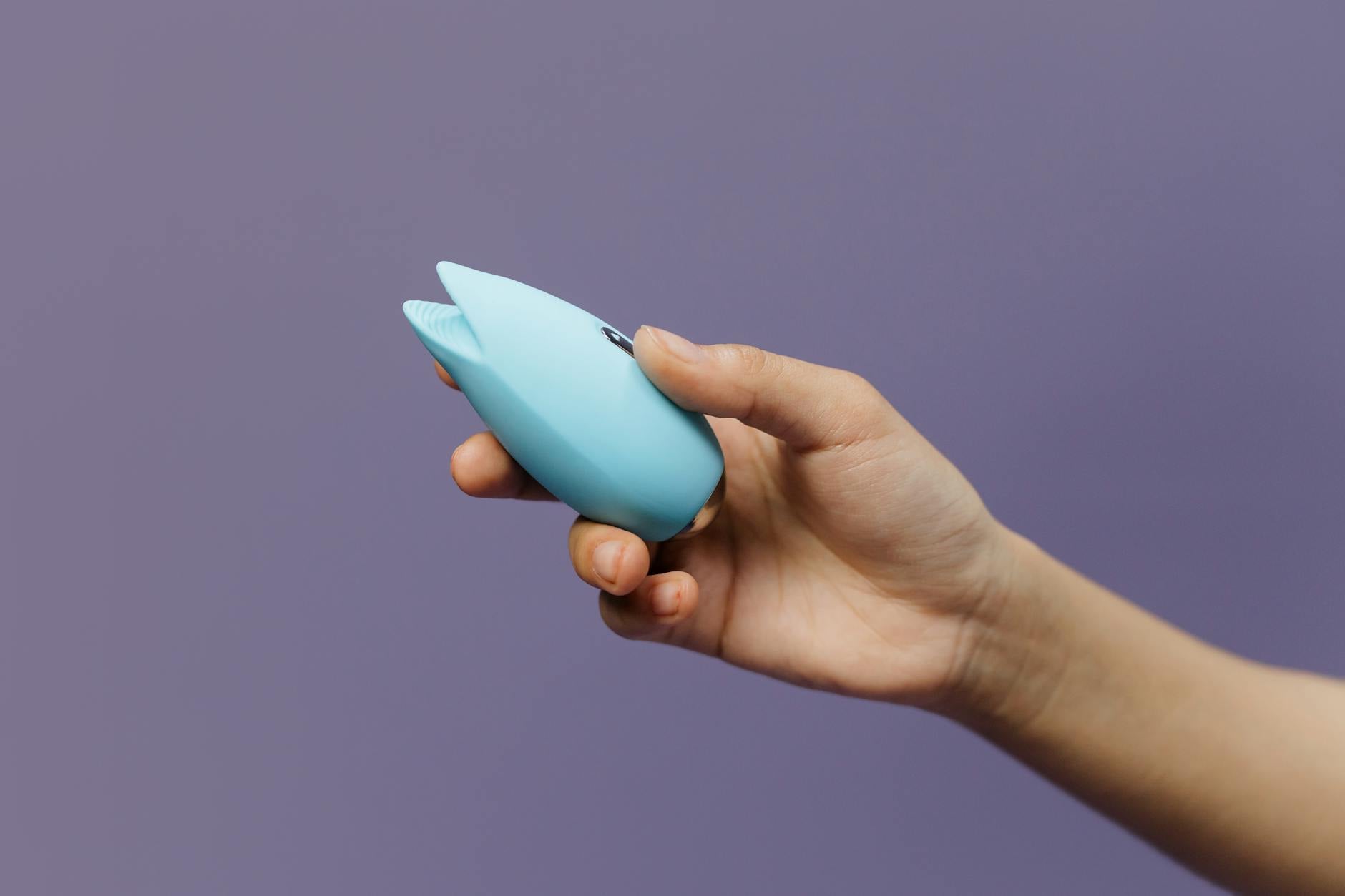
Lemon clitoral vibrators like the Lem use air-suction stimulation instead of traditional vibration. That distinction matters after a breakup for a specific reason: it's different enough from partnered sex that your brain doesn't immediately default into comparison mode.
When you're grieving a relationship, familiar sensations can trigger memory loops. If you reach for the same kind of stimulation your ex provided, your nervous system might get stuck in "we're missing someone" rather than "I'm experiencing something new."
Air-suction feels genuinely different. It's rhythmic and intense without being buzzy. It stimulates the external nerve endings around the clitoris in a way that's distinct from penetrative sex or partner-applied vibration. That novelty is actually a gift. Your body gets to explore a sensation that belongs entirely to this chapter of your life.
Starting a solo practice when desire feels broken
Let me be direct: in the first weeks after a breakup, you might not feel like masturbating. Desire often goes flatline. That's grief doing its job. You're not broken. You're processing loss.
But there's a difference between "I'm not ready" and "I'm waiting for desire to come back on its own." Desire won't. It has to be invited back. Think of it like appetite after illness. You might not be hungry, but eating small amounts consistently helps your system remember how to crave again.
Start small. Set aside 15 minutes when you're alone and unlikely to be interrupted. No pressure to orgasm. The goal is sensation, not outcome. Take a breath. Touch yourself gently. Notice what feels okay. This might feel boring or sad at first. That's fine. You're rewiring a circuit that got disrupted.
When you introduce a lemon vibrator into this practice, start on the lowest setting. Let it be background. The goal here is familiarity, not intensity. Some days you'll want to escalate. Other days you'll turn it off after five minutes. Both are legitimate.
Building a rhythm that feels like yours
One of the unexpected gifts of post-breakup solo pleasure is that you get to invent your own rhythm from scratch. No compromise. No negotiation. Just you and what feels good.
Many people find that after a few weeks of baseline exploration, a pattern emerges. Maybe you enjoy longer, slower sessions. Maybe you prefer quick, goal-oriented ones. Maybe you like to incorporate fantasy or external stimulation. Maybe you prefer to stay entirely in your body. There's no template for this. Your body will tell you what it wants if you give it space to experiment.
With a lemon vibrator specifically, you'll probably notice that patterns 2 through 4 on the device feel very different from each other. Spend time on each. The lower intensities might feel almost meditative. The higher ones might feel clinical and fast. The middle ones often hit a sweet spot. But that varies week to week, day to day. The point is to notice. To be present with what's actually happening in your body rather than what you think should be happening.
The emotional piece nobody talks about
Rediscovering solo pleasure after a breakup almost always involves encountering some uncomfortable feelings. You might feel guilty for enjoying yourself without your ex. You might feel sad that this is solo rather than shared. You might feel angry that your body is cooperating with pleasure when you're supposed to be devastated.
All of this is normal. And all of it is temporary if you don't make it mean something. Pleasure doesn't mean you're "over it." Pleasure and grief can coexist. Your body can be healing at the same time it's hurting.
If you find yourself getting stuck in those feelings during solo sessions, pause. That's your body telling you something matters. Honor it. You can come back to this tomorrow. There's no deadline for rediscovering pleasure.
How solo practice changes partnered sex later
Here's the paradox: the more robustly you explore solo pleasure, the better your partnered sex becomes. When you eventually meet someone new, you'll know what you want. You'll be able to communicate it clearly because you've actually experienced it. You won't be negotiating in the dark.
You'll also have a different relationship to desire itself. You'll know it's something that lives in your body, that it's accessible to you independently, that you don't need someone else to activate it. That confidence changes everything about how you show up in a relationship.
A practical starter roadmap
Week one: solo touch, no devices. Fifteen minutes, lowest pressure, just your hands. Notice what texture feels good. Notice how your body responds to different speeds and areas.
Week two: introduce your lemon vibrator on the lowest setting. Start external, around the vulva. Don't expect intensity. You're building familiarity, not chasing sensation.
Weeks three and four: escalate gradually. Try different patterns. Try different rhythms. Solo pleasure isn't a race. Some sessions will be satisfying. Others will feel flat. Both are data.
After a month: you'll have a clearer picture of what your solo practice actually looks like. From there, you can adjust. Maybe you want intensity. Maybe you want more time and less sensation. Maybe you want to add other elements. Your only directive is that it feels good to you.
Rediscovering solo pleasure after a breakup is one of the most underrated acts of self-care. It's not about moving on. It's about moving forward as a complete person who knows what pleasure feels like in solitude, which means you'll never again be wholly dependent on someone else to feel good in your own body. That's not cynical. That's freedom.
People also ask
Is it normal to not want to masturbate after a breakup?
Completely normal. Breakups disrupt your entire nervous system, including desire. Libido often flatlines in the first few weeks or months. This doesn't mean something is wrong with you. Your body is processing grief and loss. Desire isn't missing forever. It's dormant. If several months pass and desire hasn't returned at all, that might be worth exploring with a therapist, but in the acute phase, low libido is textbook grief.
Will using a lemon vibrator solo feel different from partnered sex?
Yes, and that's intentional. A lemon clitoral vibrator uses air-suction technology, which stimulates the external nerve endings in a way that's distinct from any kind of partnered touch. That difference can actually be helpful post-breakup because it prevents your brain from constantly comparing it to what you lost. It's novel. It's yours. It's a completely separate pleasure experience.
How long before pleasure feels normal again after a breakup?
This depends entirely on the length and intensity of your relationship, your support system, and your individual healing timeline. For some people, solo pleasure feels accessible again within a few weeks. For others, it takes months. There's no standard timeline. What matters is that you're gently inviting pleasure back rather than waiting for it to show up on its own.
Can using a vibrator help me process the breakup emotionally?
Not directly. A vibrator is a tool for physical sensation, not emotional processing. But here's what it can do: when you're in touch with your body and what feels good to it, you're grounded in the present moment rather than ruminating about the past. That shift in attention, even for 15 minutes, can offer relief. Just don't expect a vibrator to do emotional work that needs to happen in other ways, like talking with friends, journaling, or therapy.
Should I wait until I've fully moved on before exploring solo pleasure again?
No. You don't need to feel "ready." You don't need to have processed everything. Solo pleasure is part of processing. It's a way of telling your body that it still deserves good feelings even while you're grieving. Start small, be patient with yourself, and let pleasure be part of your healing rather than something you earn after you're healed.
What if solo pleasure brings up sadness instead of good feelings?
That's also normal. Breakups scramble your nervous system. Pleasure can trigger grief because it reminds your body that this experience is different now. When sadness comes up, pause. You don't need to push through it. Come back another day. Over time, as you accumulate experiences of pleasure that belong entirely to you, the sadness will soften. You're not broken. You're just rewriting a circuit.
If you're navigating the complex emotions around pleasure and partnership after a breakup, it can help to talk through it with someone trained in relationship dynamics. Reach out to us if you'd like personalized guidance.
Your pleasure matters. Your body deserves good feelings. And you deserve to know yourself well enough to ask for what you need. A breakup is an ending. It's also a beginning.